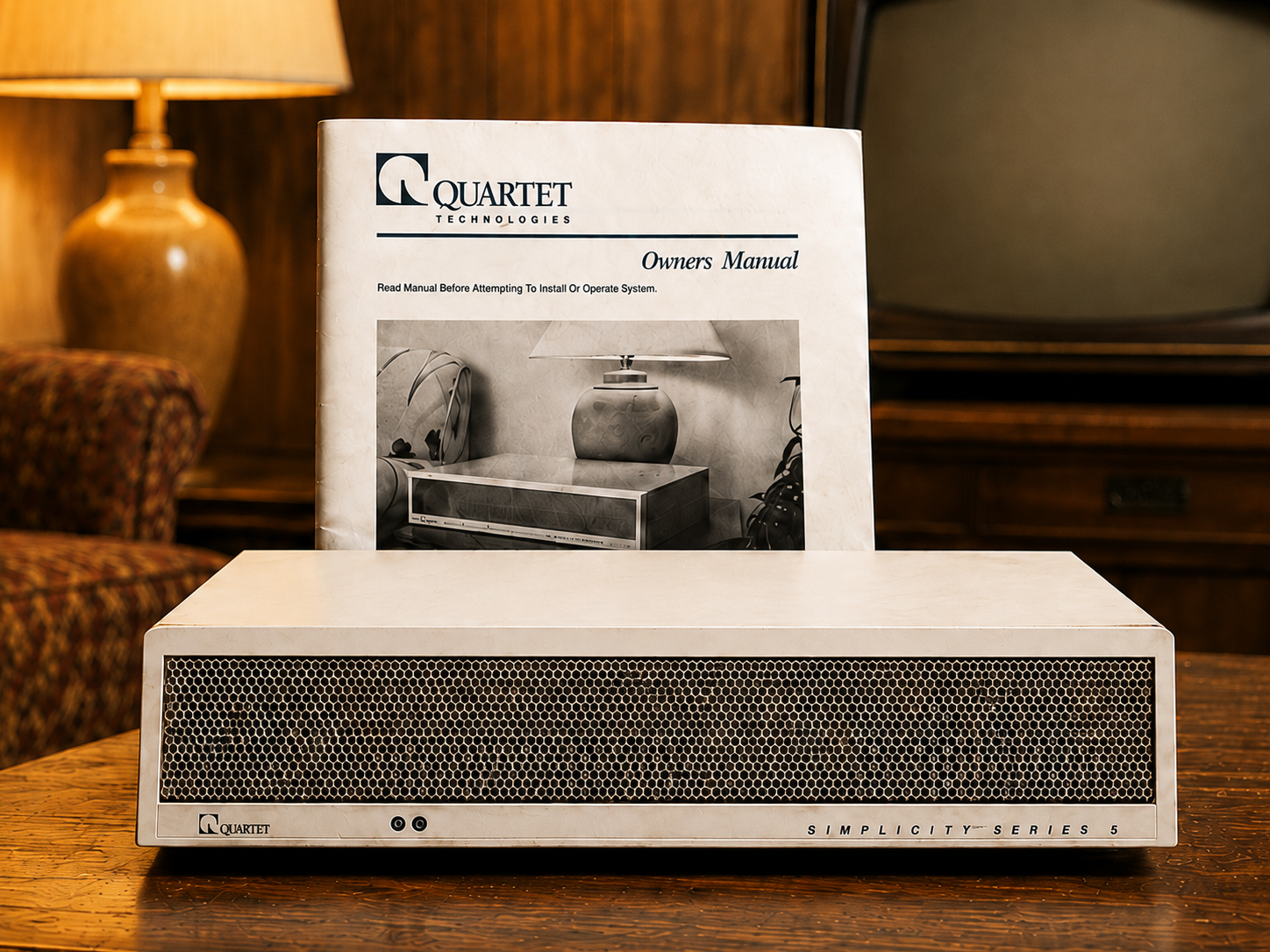
The story behind Quartet
Quartet Technology began in 1983 with a personal need and a practical question.
A personal beginning
Michael Rourke was a young engineer working with voice recognition technology when he began thinking about whether it could help his mother, Ellen. Ellen had multiple sclerosis and used a wheelchair. She was intelligent, aware, and engaged, but daily tasks many people take for granted had become difficult or impossible for her to do independently.
At the time, a few assistive devices were beginning to appear, but many still required physical control that Ellen did not have. Even large keypads or simple switches could be difficult to use if a person could not reliably move their hands.
Mike believed there had to be another way.
Banks and venture capitalists were skeptical, so he gathered private investors and began working from the basement of his home. His goal was not to build technology for technology’s sake. His goal was to help his mother regain more control over her daily life.
The lesson that shaped Quartet
One early design included a keypad so Ellen could dial the phone. Mike was proud of it until she pointed out the problem: her strength was declining, and although she could still move her hands slightly, she lacked the strength and control to press the keys reliably.
Ellen became his first and most important teacher, showing him that independence depends on more than technology. It depends on listening, adapting, and creating control that fits the person, the routine, and the realities of everyday life. That lesson became part of Quartet’s foundation and still guides Quartet today.
“A device can be clever, but if it does not fit the person using it, it does not solve the problem.”
From the beginning, Quartet learned to design by listening closely, observing real daily routines, and asking what a person actually needs to communicate, make choices, and control the environment around them.
More than device control
As the technology improved, the impact reached beyond operating devices. For Ellen, being able to control the television, open doors, use the phone, turn pages, write on a computer, and manage everyday tasks meant more than convenience. It helped restore privacy, confidence, self-direction, and a stronger sense of independence.
That experience shaped the company Quartet became.
The mission continues
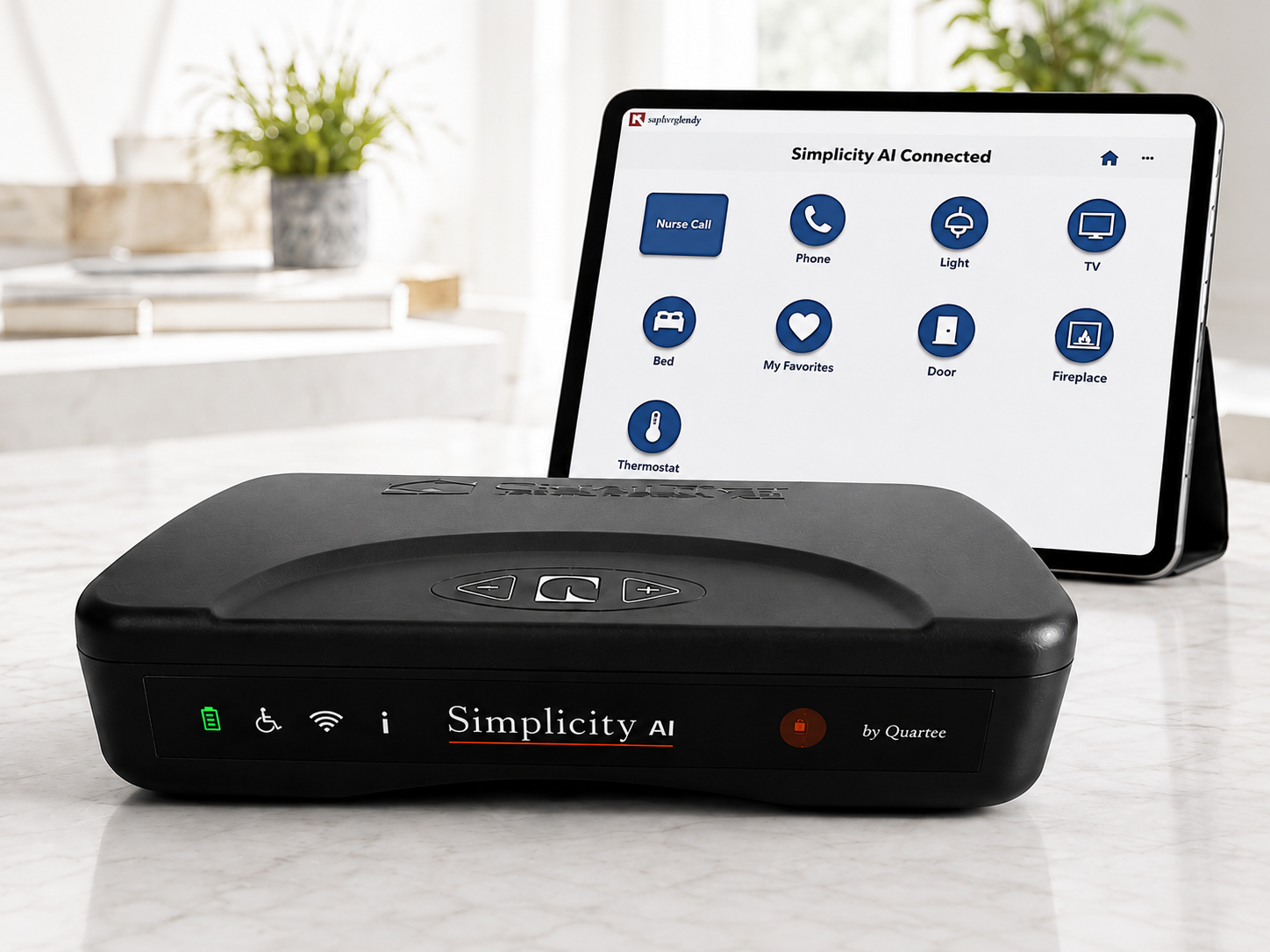
Over the decades, Quartet has continued to develop environmental control technology around the real needs of the people who use it. Products have changed from early voice-activated systems to today’s Simplicity AI, but the purpose has remained the same: helping people gain practical control over everyday life.
Simplicity AI carries that work forward with modern voice, switch, touch, and compatible eye-gaze access, along with personalized menus, favorites, spoken prompts, and support tools designed for real-world use.